Showing posts with label Macroeconomics. Show all posts

Wednesday, 21 June 2017

How do you calculate GDP with the Income Approach?

By Sean Ross
The Income Approach to measuring gross domestic product (GDP) is based on the accounting reality that all expenditures in an economy should equal the total income generated by the production of all economic goods and services.

Monday, 19 June 2017

What is GDP and why is it so important to economists and investors?

The Gross Domestic Product (GDP) is one of the primary indicators used to gauge the health of a country's economy. It represents the total dollar value of all goods and services produced over a specific time period; you can think of it as the size of the economy. Usually, GDP is expressed as a comparison to the previous quarter or year. For example, if the year-to-year GDP is up 3%, this is thought to mean that the economy has grown by 3% over the last year. The United States has a GDP of $18,869.4 billion as of the fourth quarter of 2016, according to the Bureau of Economic Analysis.

Nigeria Major Economic Indicators as at Monday, 19th June, 2017


By Kibash

Inflation Rate - 16.25%

Monetary Policy Rate(MPR) - 14%

Dollar - Naira Exchange Rate - N305.75

Average PMS Price - N147.3

Crude Oil Price - $46.9

Wednesday, 19 October 2016

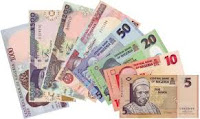
The Pound is One of the World’s Worst-Performing Currencies in the Past Year


By C.W. | LONDON
RARELY do people compare the British pound to the Nigerian naira, Azerbaijani manat or Malawian kwacha. But these are special times. Following the Brexit vote, investors dumped sterling. Some are worried about the possibility of a "hard" Brexit. Others are simply baffled by the government's xenophobic and divisive rhetoric.

Tuesday, 11 October 2016

How Does Government Budget Deficit Impact Savings?

By Kibash
When we consider the Savings-Investment model what happens when the government runs a budget deficit and how does this impact the real rate of interest and savings (private)?

Monday, 10 October 2016

Nigeria Major Economic Indicators as at Monday, 10th October, 2016

By Kibash
Inflation Rate - 17.61%
Monetary Policy Rate(MPR) - 14%
Unemployment Rate - 13.3%
Underemployment Rate - 19.3%
Youth unemployment /Underemployment Rate- 49.5%
Dollar - Naira Exchange Rate - N305
Average PMS Price - N147.3


Source: CBN and NBS Nigeria    

Microeconomics vs Macroeconomics: Which Is More Useful for Investment?


By Sean Ross
Investors should give up trying to make decisions based on macroeconomic forecasts. This advice may run counter to the investment culture created by major news outlets, but consider the alternative: An investor must identify

World's Top 20 Economies by 2020


By Julia Hawley
By the year 2020, a great shift will have occurred in the worldwide balance of economic power. Analysts predict emerging market economies will become some of the most important economic forces, and China will take the top spot in the list of the world’s largest economies by gross domestic product (GDP),

Thursday, 6 October 2016

Is GDP Really an Accurate Measure of Economic Growth?


By Sean Ross
Former Microsoft Corporation (NASDAQ: MSFT) chief architect Edward Jung once called Gross Domestic Product (GDP) the standard measurement of economic health and well-being, a misleading indicator that sabotaged development and innovation. He's not alone in his disapproval of simple aggregates. A growing chorus of researchers, economists,

Monday, 22 February 2016

Branches Of ECONOMICS

 Economics comprises of so many branches, new branch evolves day by day. The two major branches of Economics are:
1. Macroeconomics .
2. Microeconomics
 

Other branches of Economics are: